
Criminal Cases in Wabash County Courts
Illinois Circuit Court has original jurisdiction over felony, misdemeanor, traffic, and ordinance cases. Wabash County is part of the Second Judicial Circuit and Fifth Appellate District. The research found no separate municipal court portal for Mount Carmel, Allendale, or Bellmont. Filed local prosecutions therefore lead to the Wabash County Circuit Court, not to a village court database.
Circuit Clerk Angela K. Crum is the custodian of Wabash County criminal case records. Resident Judge William Hudson conducts judicial proceedings. The State's Attorney files and prosecutes charges, while the clerk preserves the official case history. That division matters: the prosecutor decides what to file, the judge rules, and the clerk supplies the docket, orders, judgment, sentence, and certified copies.
Wabash County Circuit Clerk Counter
The direct fallback for any Wabash County criminal court case is the Circuit Clerk at 401 North Market Street, Mount Carmel, Illinois 62863. The mailing address is P.O. Drawer 997, the phone is 618-262-5362, and the fax is 618-263-4441. Public hours are 8:00 a.m. to 4:00 p.m. The counter is the best route when Judici blocks a search, a document is not remotely available, or a certified result is needed.
Wabash County Circuit Clerk
401 North Market Street
Mount Carmel, IL 62863
P.O. Drawer 997
618-262-5362
8:00 a.m. to 4:00 p.m.
The Illinois Courts courthouse directory also identifies a copier, printer, e-filing kiosk, self-help center, accessible services, and free parking in front and along the side. Ask the clerk about security and device rules before bringing recording equipment.
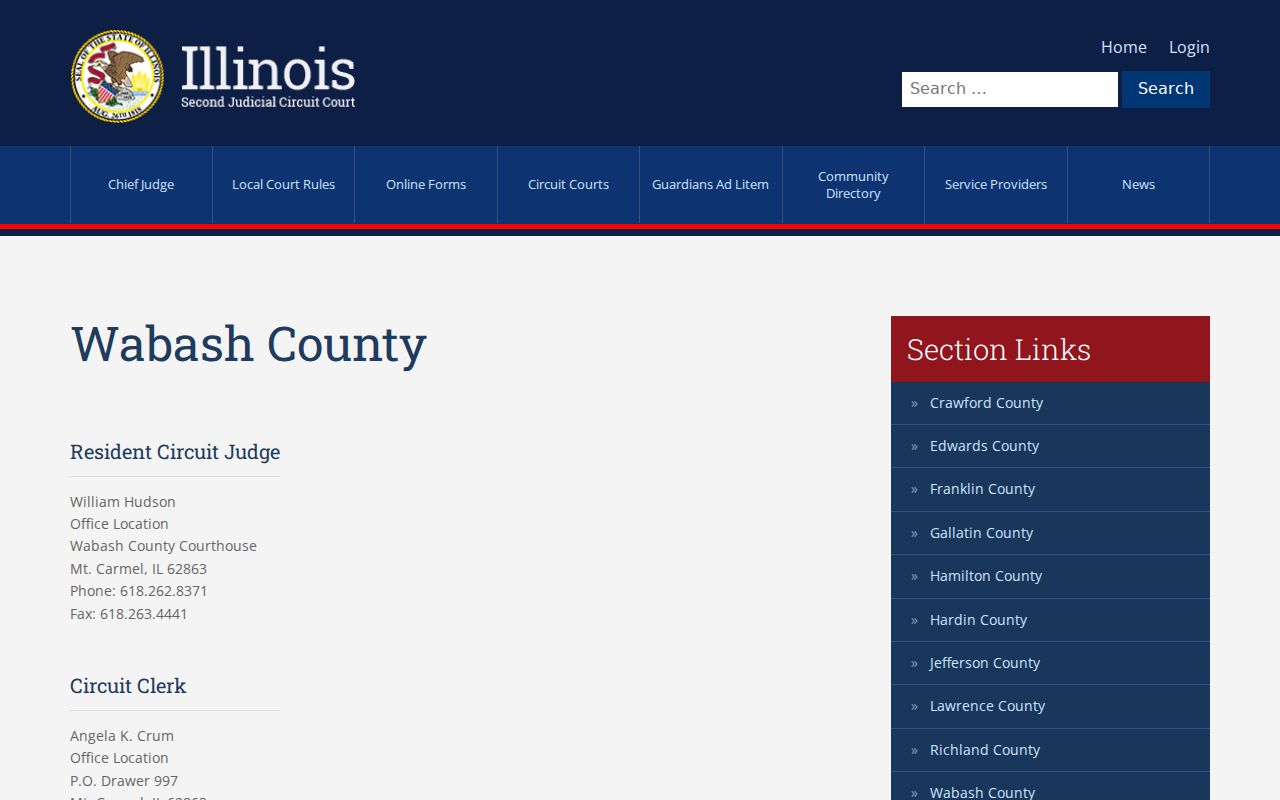
The directory view reinforces that court officials and record access are centered at the North Market courthouse.
How to Search Wabash County Case Records
The free web starting point is the Wabash County landing on Judici, court code IL093015J. Its navigation exposes Home, Cases, Docket, Premium Services, My Cases, My Schedule, My Filings, My Account, and Login. Automated research reached CAPTCHA on the case and docket screens, so the fields below distinguish observed entry routes from details that must be confirmed in a human browser.
- Open the Wabash County Judici landing and select Cases for a party or case search.
- Complete the CAPTCHA and use the name or case identifier options the live screen provides.
- Match the correct Wabash County matter by court, filing date, party display, and charge details.
- Read the docket in date order, noting hearings, orders, disposition, sentence, and financial entries actually shown.
- Call or visit the Circuit Clerk for missing documents, a plain copy, or a certified judgment.
| Search route | Observed access | Best use | Limit |
|---|---|---|---|
| Cases | CAPTCHA-gated | Party or case lookup | Live fields require human confirmation |
| Docket | CAPTCHA-gated | Daily court activity | Not the complete paper file |
| My Cases / Schedule | Account feature shown | Saved case tracking | May require login or service terms |
| Circuit Clerk | Phone, mail, counter | Copies and record confirmation | Copy fee was not published |
The official Wabash Judici landing shows the county court selection and service tabs.
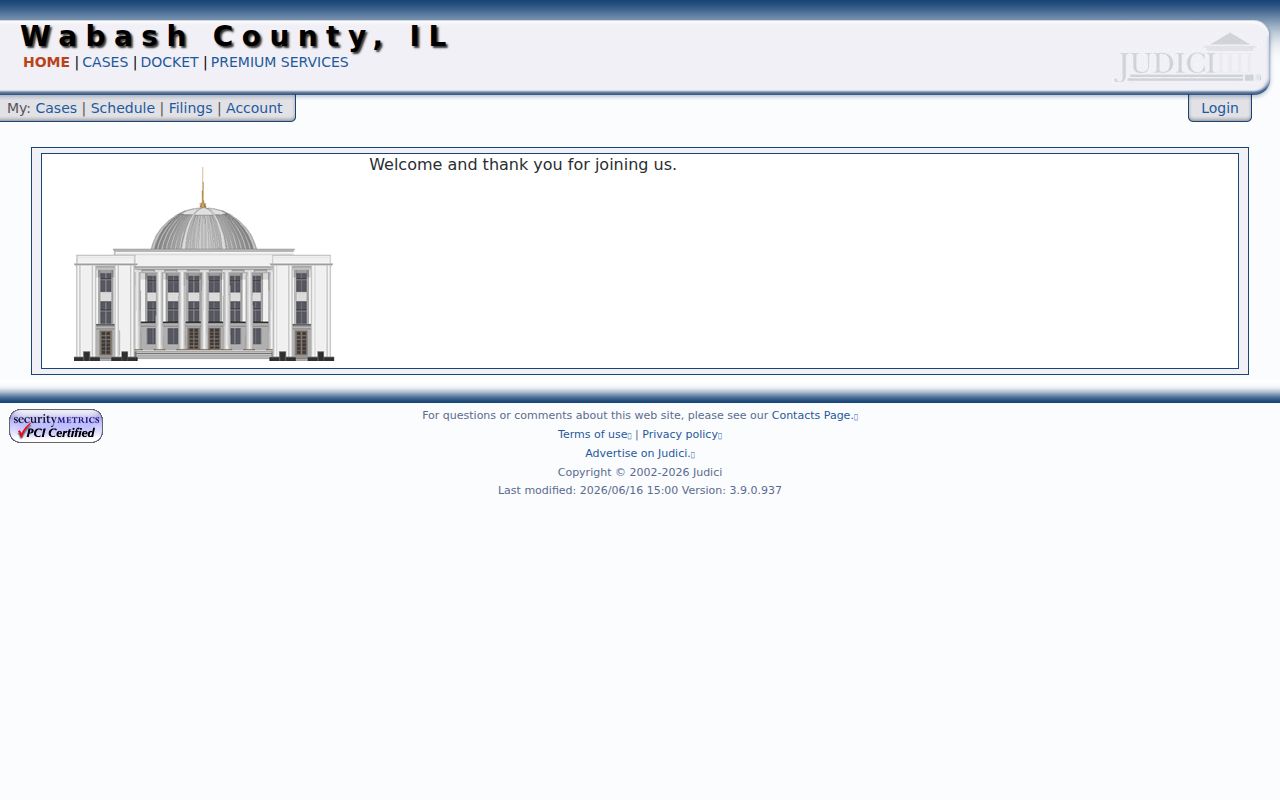
This landing is an index route into Wabash County cases, not a promise that every filed paper is online.
When Wabash County Judici Stops at CAPTCHA
A CAPTCHA is an access gate, not a finding that no Wabash County criminal case exists. Try the live Cases screen in a normal browser, confirm that Wabash County is selected, and then use the clerk fallback if the challenge fails. Filing lag, spelling differences, a restricted access label, or a matter not exposed remotely can also explain an empty result.
The official Wabash case-search entry is the point where the browser challenge appears.
The image shows why 618-262-5362 remains an essential access channel rather than a last-resort guess.
What the Wabash County Case File Shows
A Wabash County criminal case file should be read as a connected record. Start with the case number and court, then compare the filed charge with later amendments and the final judgment. Not every item below is guaranteed to appear online. The Circuit Clerk can confirm what is in the official file and which document controls.
| Case Number & Court | Identifies the exact Wabash County proceeding and avoids mixing parties with similar names. |
|---|---|
| Charging Document | The complaint, information, or indictment states the accusation filed by the prosecutor. |
| Docket Entries | A dated log of filings, appearances, motions, orders, warrants, and other case events. |
| Hearing Dates | Scheduled date, time, courtroom, and event type when those fields are public and displayed. |
| Disposition & Judgment | The result for each charge, such as dismissal, acquittal, plea, or conviction. |
| Sentence & Conditions | Probation, jail, IDOC, restitution, assessments, and other terms ordered by the court. |
Judici Docket or Wabash County Certified File
A docket is a useful chronology, but it may summarize rather than reproduce a complaint, exhibit, signed order, or sentencing judgment. A certified copy from the Circuit Clerk carries the clerk's authentication and is stronger evidence of the outcome than a booking charge or news release. Ask for the exact judgment or order instead of requesting an undefined “full background check.”
The official Wabash daily docket entry provides the calendar route after verification.
The daily docket helps locate activity, while the clerk remains the source for the filed and certified court record.
Stages of a Wabash County Criminal Case
A Wabash County court record begins after law enforcement action reaches prosecutorial review and a charge is filed. A prompt first appearance and pretrial decision can precede arraignment. Motions, discovery, hearings, and negotiations follow. The matter then ends through dismissal, plea, trial, or another lawful disposition, with sentencing after a conviction and possible appeal or post-judgment action.
Case flow: Charges Filed › Arraignment › Pretrial › Plea or Trial › Disposition › Sentencing
Second Circuit rules state that criminal jury trials involving possible incarceration are held in person. A witness may appear remotely only with judicial approval and party agreement. A remote-eligible notice must include the courtroom, connection instructions, dial-in information, courthouse address, and clerk phone, so a bare video link is not enough.
Wabash County Court Documents Through re:SearchIL
Illinois Courts links re:SearchIL as a remote document-access system for permitted records. Its role differs from Judici: Judici supplies the county case and docket route, while re:SearchIL can provide document access subject to account, permission, and record limits. Neither service changes the Circuit Clerk's custody of the official Wabash County file.
The official re:SearchIL service explains the state-linked remote document channel.
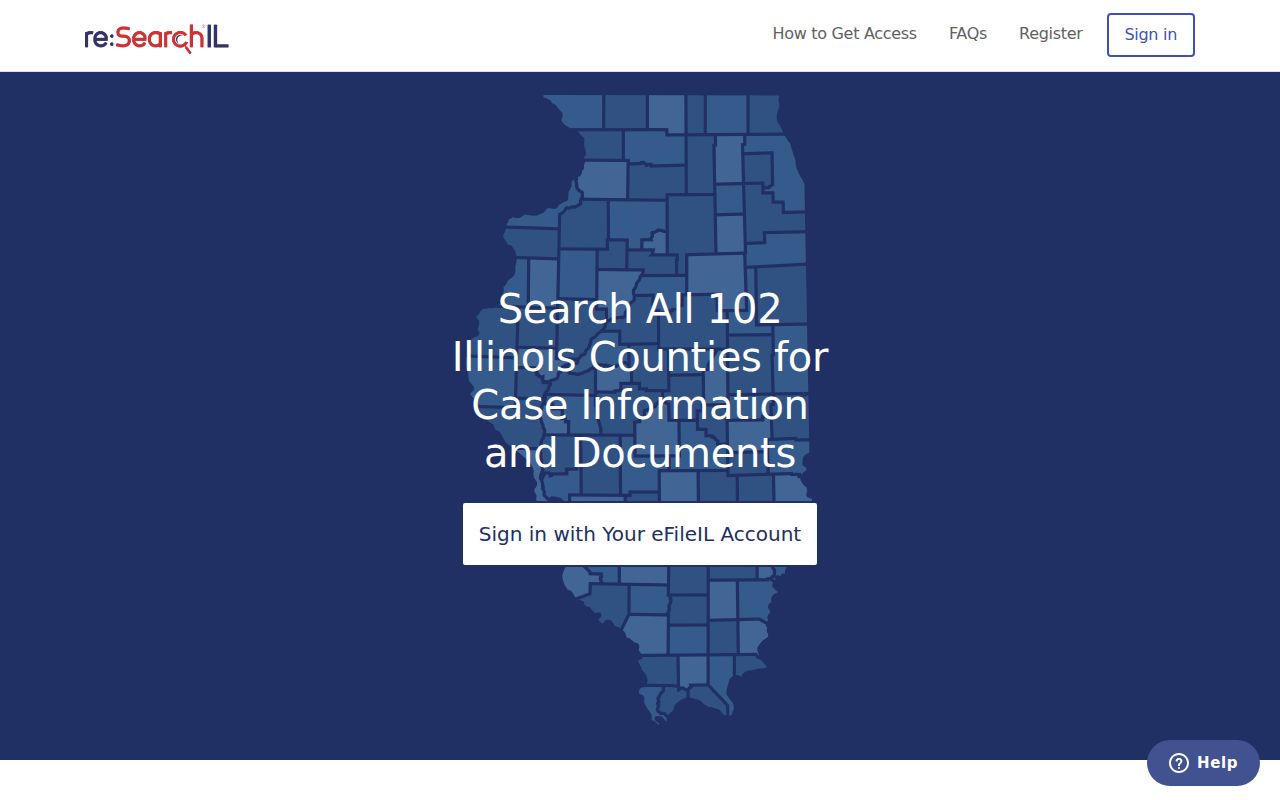
The separate service illustrates why a docket hit and access to the underlying document are two different steps.
Wabash County Sentencing and Probation Forms
The Second Circuit lists forms that reveal common parts of a Wabash County criminal file, including an Adult Sentencing Judgment and Probation Order, officer probable-cause affidavit for warrantless detention, Finding of Probable Cause, Impact Incarceration consent, home-release conditions, and Judgment Sentence to IDOC. A form title does not prove that it was filed in a particular case. Verify the docket and signed order.
The Second Judicial Circuit local-rules page is also the source for local proceeding requirements.
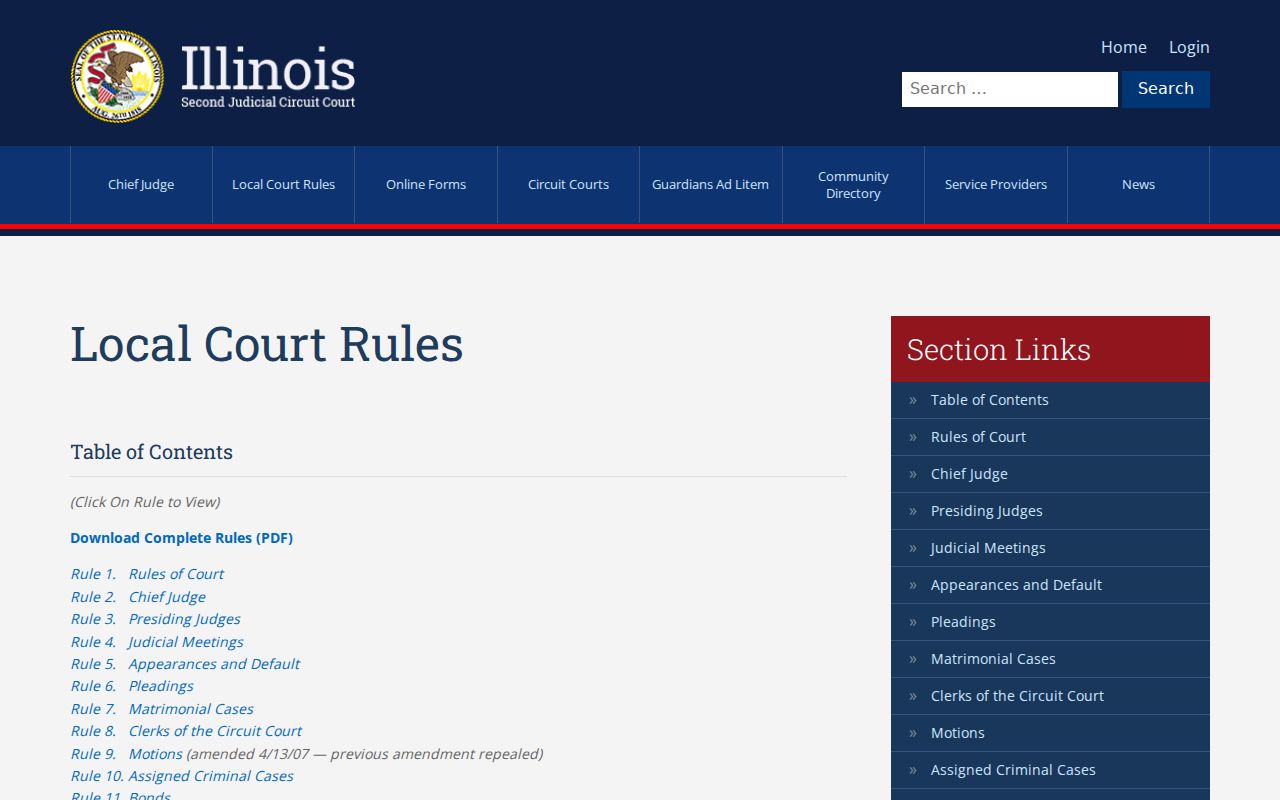
Local rules add procedure to the docket and help explain why some hearings are in person while limited participation may be remote.
Wabash County Case Record Access and Restrictions
Illinois court records can be labeled Public, Impounded, Confidential, Sealed, or Expunged under 705 ILCS 86/5. Public records are generally available. Impounded records remain available to parties but otherwise require a court order. Confidential, sealed, and expunged records follow distinct limits. Juvenile files, protected identifiers, victim information, and material covered by a specific order may not appear in a public Wabash County search.
When a Wabash County case is missing, give the clerk the exact name, spelling variants, approximate filing year, and any known case number. Ask whether the record is public, whether it is available only at the counter, and whether a plain or certified copy fits the need. The inspected official pages did not publish Wabash criminal copy fees, so call to confirm the current amount before ordering. For broader distinctions among booking, court, and repository records, consult the Wabash County criminal history overview.